Pages

Showing posts with label Nathaniel Hawthorne. Show all posts

Tuesday, November 19, 2019

Ada Shepard Badger

Ann Adeline "Ada" Shepard/Shephard (1835-1874) daughter of Otis Shepard/Shephard (1797-1858) and Ann Pope (1803-1886) born in Dorchester, Massachusetts. She married Henry Clay Badger and had four children: Theodore Badger (1862-1910), Frederick Badger (1865-1944), Ernest Badger (1869-1888), and Katharine Badger (1872-18920. Ada is a direct line to Ralph Shephard, who came to Massachusetts in 1635 on the ship "Abigail." Photo from Special Collections Concord Library
The "Banner of Light" published an account of Ada was governess and translator to the children of author Nathaniel Hawthorne (1804-1864) and Sophia Peabody (1809–1871): Below is a photo of the Hawthorne children: Una Hawthorne (1844-1877) Julian Hawthorne (1846-1934) Rose Hawthorne (1851-1926) taken 1862 by Silsbee and Case courtesy of Hawthorne in Salem
Ada was recommend by Horace Mann, husband of Mary Tyler Peabody Mann, sister of Sophia Peabody Hawthorne. Horace was president of the co-ed Antioch College in Yellow Springs, Ohio where Ada was a student.
Read my article on GenealogyBank blog "Writer Nathaniel Hawthorne’s Real-Life ‘Ghost Story’"


Ada traveled with the Hawthorne family for two years visiting major cities in France, England, Italy and Switzerland. 

Susan D Abele (1904-1999), granddaughter of Ada notes in her essay, "Ada Shepard and her Pocket Sketchbooks, Florence 1858,"
that "scholars have pigeonholed Ada as the governess, using her correspondence to illuminate her famous employer's European experiences. But Ada was more than a governess. Her education was unusual for the time and her later work as an educator gained the respect of her peers." Susan Abele's assertion is quite accurate. Ada attended speeches and lectures given by women's right advocate Lucy Stone and abolitionist William Lloyd Garrison

In Memories of Hawthorne, Rose Hawthorne Lathrop (1851-1926)  "Last evening Miss Ada Shepard and I went to a neighboring villa to see some table-turning, which I have never seen, nor anything appertaining to spirits,"  Miss Shepard then took a pencil and paper for the spirits to write Photo from Sundry Thoughts
Aunt Ingersoll Julian Hawthorne wrote to regarding Mary Rondel.
Among the artist circles present during these 
Elizabeth Barrett Browning (1806-1860), Robert Browning (1812-1889) and their son, Robert "Pen" Wiedeman Barrett Browning (1849-1912), Margret Fuller  
William Wetmore Story (1819-1895), his wife Emelyn Story (1820-1895). 

William Wetmore Story (1819-1895) son of Joseph Story (1779-1845) and Sarah Waldo Wetmore (1779-1855) married Emelyn Eldredge (1820-1895) daughter of Oliver Eldredge (1789–1857) and Hannah Smalley (1793–1867) His sculpture Cleopatra Photo from The New York Times 1916
 

Ada married Henry Clay Badger (1832-1894) son of Joseph Badger (1792-1852) and Eliza Mehitable Sterling (1799-184) .

Henry Clay Badger (1833-1894) graduated from Antioch College in 1857, and from 1859 to 1861, he was its Professor of Modern Languages. He was ordained on Nov. 13, 1862, and served congregations in Cambridge, Dorchester (Christ Church), Staten Island, and Ithaca, New York. He was curator of the Harvard Map collection from 1889 to 1892 Photo from Unitarian Universalist Association. Minister files, bMS 1446. Andover-Harvard Theological Library, Harvard Divinity School

The couple met a professor at Antioch Ada established a  School known as the Newbury Street School in Boston.
One account of Ada's death was published by Henry's brother, William Whittlesey Badger (1835-1898) who it an "over-sensitive constitution resulting in nervous prostration and loss of reason."

Henry Clay Badger Photo from Andover-Harvard Theological Library Special collections Unitarian Ministers bms 1446


The Newbury Street School. [A Circular.] 1874 The school year announcement to reopen after Ada passed


Lucretia Peabody Hale (1820-1900) daughter of Nathan Hale and Sarah Preston Everett

 William Wetmore Story--Cleopatra (1858) was described and admired in Nathaniel Hawthorne's romance, The Marble Faun, or The Romance of Monte Beni. The replica in the collection of the Metropolitan Museum of Art in New York City. Gift of Mr. and Mrs. Henry M. Bateman (78.3) see William Story and Cleopatra by Albert T Gardner 


  • Giles Badger and his Descendants, First Four Generations by a Descendant John Cogswell Badger, Manchester, N.H. 
  • A History of the Dorchester Pope Family. 1634-1888: With Sketches of Other Popes in England and America, and Notes Upon Several Intermarrying Families
  • Ralph Shepard, Puritan published in Massachusetts 1893 Ralph Hamilton Shepard
  • Ada Shepard and Her Pocket Sketchbooks, Florence 1858 Susan D, Abele  http://www.999info.net/Family/Susan/Ada.pdf
  • Nathaniel Hawthorne and His Wife, Volume II Julian Hawthorne, 1884
  • A Volume of Records Relating to the Early History of Boston, Volume 36
  • Letter http://enews.antiochcollege.org/2013/05/songs-stacks/ada-shepard-mary-richardson 
  • The Brownings Correspondence https://www.browningscorrespondence.com/ 
  • The Salem World of Nathaniel Hawthorne 2001 Margaret B. Moore 
  • Hawthorne and his circles Julian Hawthorne 
  • Mary Peabody and Horace Mann  http://www.womenhistoryblog.com/2016/02/mary-peabody-mann.html 
  • Julian Hawthorne's Contributions to the "Pasadena Star-News", 1923–1935 
  • Tea, Strawberries, and Spirits: A History of Spiritualism and the Occult in Salem: The Rise of Witch City Maggi Smith-Dalton (Charleston, SC: History Press, 2012)
  • Hawthorne's mad scientists: pseudoscience and social science in nineteenth-century life and letters
Joseph Badger the first missionary of the Western Reserve published by Ohio Archeological and Historical publication Byron R Long
Jonathan PHELPS, father of Rachel Phelps Hawthorne from "The New England Journal of Medicine, Volume 104"

Thursday, October 31, 2019

Writer Nathaniel Hawthorne’s Real-Life Ghost Story from GenealogyBank Blog


an eerie tale about Nathaniel Hawthorne and a troubled spirit that came to him in a seance....

When author Nathaniel Hawthorne and his wife Sophia prepared for their European trip in 1857, they needed a governess for their three children Una, Julian, and Rose. Horace Mann recommended Ann Adeline Shepard (1835-1874), a student at his school (Antioch College) in Ohio. The governess “Ada” possessed a skill in the occult known as a “writing medium.” It was a form of divination in which the medium holds a pencil over a piece of paper, then receives spirit communication through writing. Read more at GenealogyBank

Saturday, September 2, 2017

Scholar finds source for 'Scarlet Letter' New edition released of witch novel written by Newburyport man in 1842


Arthur Miller, author of “The Crucible,” was hardly the first writer to be fascinated by the Salem Witch Trials. 
In 1842, a writer from Newburyport named Ebenezer Wheelwright wrote a novel called “The Salem Belle: A Tale of 1692,” which drew on the same subject.
“It’s a story about a fellow who’s rebuffed by a woman he loves, and to get back at her, he claims she’s a witch,” said Richard Kopley, a professor emeritus of English at Penn State DuBois. “It’s 1692, and he’s believed — he’s playing to the superstitions of the populace.”
Kopley wrote an introduction for a new edition of “The Salem Belle: A Tale of 1692” that was published this year by Pennsylvania State University Press.
A scholar of American literature, Kopley had found a short review of the novel in a 19th-century magazine called The Pioneer. He had written about sources for Nathaniel Hawthorne’s “The Scarlet Letter” in the past, and this review seemed to reveal a brand-new one.
“The description of the plot (in the review of “The Salem Belle”) culminates with reference to an anticipated death at the scaffold,” Kopley said. “I thought, that’s how ‘The Scarlet Letter’ ends — with death at the scaffold.”
After finding and reading a copy of “The Salem Belle,” he found two other scenes with powerful verbal and thematic echoes of scenes from “The Scarlet Letter” and felt convinced of the connection between the two books.
Although “The Scarlet Letter” is concerned with adultery and not witchcraft, Kopley felt Wheelwright’s biography made the book important to Hawthorne.
Wheelwright was a descendant of John Wheelwright, who was involved in the antinomian controversy — a theological dispute fostered by John’s companion, Anne Hutchinson — that shook the Puritan church in Colonial times.
“Hawthorne would have known of John because he knew Puritan history,” Kopley said. 
That controversy in turn underlays themes of sin and redemption that Hawthorne pursued throughout his fiction.
“He’s secretly allegorizing the history of the antinomian controversy as a way to tell another allegory — the defiance of Adam and Eve in the garden,” Kopley said.  
No author’s name was given in “The Salem Belle,” and it took an enormous amount of detective work for Kopley to discover Ebenezer Wheelwright’s identity.
Among his discoveries, after searching several archives, was that Wheelwright had declared bankruptcy and probably published the book anonymously because he didn’t want creditors to claim any profits he made from his writing.
Kopley also visited Wheelwright’s former home on High Street in Newburyport and spoke to his descendants.
“This was a mission of mine, so I could tell the story of the man behind the book, which was a critical source for ‘The Scarlet Letter,’” Kopley said.

From Newburyport News
piece Hawthorne's family scandal that fueled "The Scarlet Letter"

Saturday, September 14, 2013

Rachael Phelps Hawthorne Paternal Ancestors of Nathaniel Hawthorne

A big Thanks to Teresa Whitney from Hawthorne of Salem
The Paternal Ancestors of Nathaniel Hawthorne: Introduction


Drawing of Nathaniel Hathorne, Sr., son of Daniel and Rachel Hathorne
Drawing of Nathaniel Hathorne, Sr., son of Daniel and Rachel Hathorne (courtesy of Peabody Essex Museum, Salem, MA)


NOTE: Spelling for Hathorne/Hawthorne /Hathorn 

Major William Hathorne (Hawthorne's paternal great-great-great- grandfather; c. 1606/7-1681) 
Justice John Hathorne (son of Major William Hathorne and Hawthorne's paternal great-great-grandfather; 1641-1717; ) Captain William Hathorne (brother of Justice John Hathorne; 1645-1678/79) Captain Joseph Hathorne (Hawthorne's paternal great-grandfather; son of Justice John Hathorne; 1692-1762) Daniel Hathorne (Hawthorne's paternal grandfather; 1731-1796) Colonel John Hathorne (son of Joseph Hawthorne;1749-1834) Rachel Phelps Hathorne (1734-1813;Hawthorne's paternal grandmother) Captain William Hathorne (brother of Daniel Hathorne; 1715/16-1794) Captain Nathaniel Hathorne (1775/6-1808;Hawthorne's father) Most of Hawthorne's paternal ancestors are buried at the Charter Street Burying Point in Salem. Major William Hathorne (Hawthorne's paternal great-great-great grandfather; c. 1606-1681)


Major William Hathorne arrived in the New World in 1630 on the Arbella. After living in Dorchester, MA, he moved around 1636 to Salem. He became a deputy to the General Court of Massachusetts and gained the rank of major in campaigns against the Indians. He was, as Hawthorne later characterized him, "a bitter persecutor" of Quakers. In particular, he is remembered for ordering the whipping of Ann Coleman. Both in "Main Street" and in "The Custom House" sketch, Hawthorne refers to this ancestor as a persecutor of Quakers, and he is referred to indirectly in "Young Goodman Brown.

John Hathorne was the third son and fifth child born to Major William and Anna Hathorne. He became a prosperous merchant in Salem and a judge on the Superior Court. He was also commander-in-chief against the Indians in 1696. He is best known, however, as the "witch judge" as he was a magistrate of the Court of Oyer and Terminer and the chief interrogator of the accused witches in the Salem witchcraft hysteria of 1692. John Hathorne is entered at the Charter Street Burying Point in Salem. Captain William Hathorne (brother of Justice John Hathorne; 1645-1678/79)
Captain Willliam Hathorne fought in King Philip's War in 1675.
Joseph Hathorne (son of Justice John Hathorne; 1692-1762)
Joseph Hathorne prospered, first as a ship captain and then as a farmer. He married Sarah Bowditch, daughter of William Bowditch and Mary Gardner, first cousin of Ruth Gardner Hathorne.
Daniel Hathorne (Hawthorne's paternal grandfather; 1731-1796)


Son of Josepth Hathorne, Daniel married Rachel Phelps at 27 Union St. in Salem, the house where Nathaniel Hawthorne was born in 1804. Daniel Hathorne served in the Revolutionary War and was hailed for his bravery in a song entitled "Bold Hathorne." When he died in 1796, he was honored by the Marine Society and the Fire Club at his funeral at the Charter Street Burying Point, and the notice of his death was published in the Salem Gazette.
Captain William Hathorne (brother of Daniel Hathorne)


William Hathorne, Hawthorne's great uncle, married Mary Touzel. William Hathorne and his wife inherited from John Touzel half of the house on Essex St. owned by Philip English. (Touzel left the other half to Susannah Touzel Hathorne, a widow.) Captain William Hathorne is buried in the Charter Street Burying Ground as is his wife, Mary Touzel Hathorne.
Rachel Phelps Hathorne (Hawthorne's paternal grandmother;1734-1813;)
Hawthorne was also descended on his father's side from the Phelps; his paternal grandmother was Rachel Phelps Hathorne. Rachel is a descendant of Henry Phelps and his first wife, Eleanor /Baskell/Batter . Henry's second wife, Hannah, was originally married to Nicholas, Henry's brother. Nicholas and Hannah Phelps were Salem Quakers who held meetings at their home in the Woods, as the area west of Salem was called at the time. William Hathorne had ordered that those who held such meetings be arrested, and eventually Hannah was jailed and Nicholas was banished from the Massachusetts Bay Colony. Thus Hawthorne may have felt a connection to both the persectors of Quakers and the persecuted which, says Margaret Moore in The Salem World of Nathaniel Hawthorne, may account for "the very ambiguity with which he treats the Quakers" (37).
We are grateful to Richard James Phelps, Associate Director of Public Affairs, College of the Holy Cross, and Gwen Boyer Bjorkman, noted Quaker/Hannah Phelps historian, for the following genealogy of the Phelps/Hathorne connection: Starting with Henry Phelps, born 1595, married Eleanor Sharp issue:


son Henry Phelps, Jr, born 1615, arrived in Salem 1634, married Eleanor Batter
son John Phelps, born 1644, married Abigail Antram
son Henry Phelps, born 1673, married Rachel Guppy
son Jonathan Phelps, born 1708, married Judith Cox
daughter Rachel Phelps, born 1733, married Daniel Hathorne
son Nathaniel Hathorne, born 1775, married Elizabeth Clarke Manning
son Nathaniel Hawthorne, born 1804


Captain Nathaniel Hathorne (1775/6-1808; Hawthorne's father) Son of Daniel Hathorne, Nathaniel Hathorne was, like his son, born at 27 Union St. in Salem. Like many of his Hathorne ancestors, Nathaniel Hathorne chose a life at sea. He sailed aboard the America in the late 1780s, aboard the Perseverance, a ship owned by his brother-in-law, Simon Forrester, in 1796. Nathaniel Hathorne married Elizabeth Clarke Manning who lived a block away on Herbert St., on August 2, 1801. Their first child, Elizabeth, born on March 7, 1802, and their second child, Nathaniel, born on July 4, 1804, were both born while Hathorne was on a sea voyage. Hathorne returned later in 1804, having achieved the rank of Captain, and was inducted into the East Indian Marine Society in November of that year. He sailed on this last voyage on December 28, 1807, on the Nabby bound for Surinam, or Dutch Guiana. Less than a month later, on January 9, 1808, his wife gave birth to Maria Louisa. A few months later, in early April 1808, she received the news of her husband's death from yellow fever in Surinam.
.

Hannah Phelps
Davenport-Hathorne--Judge Curwin Witch House
Page citation: Hawthorne in Salem

Is it really the House of the Seven Gables? Perhaps, perhaps not. Either way the Turner-Ingersoll mansion in Salem breathes New England history

A Wonderful Travel & Historical Share from Elwood P. Dowd (and a few pics added by Melissa)
 http://www.thehistorytrekker.com/travel-photographer/new-england/is-it-really-the-house-of-the-seven-gables-perhaps-either-way-the-turner-ingersoll-mansion-in-salem-breathes-new-england-history


The House of the Seven Gables, Salem, Massachusetts
“Halfway down a by-street of one of our New England towns stands a rusty wooden house, with seven acutely peaked gables, facing towards various points of the compass, and a huge, clustered chimney in the midst. The street is Pyncheon Street; the house is the old Pyncheon House; and an elm-tree, of wide circumference, rooted before the door, is familiar to every town-born child by the title of the Pyncheon Elm.”


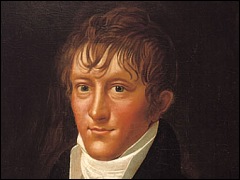
Portrait of Nathaniel Hawthorne at The House of Seven Gables,Turner-Ingersoll Mansion, Salem, Essex County, Massachusetts


From the perspective of the twenty-first century, we can breathe easier in a way, knowing that the victims of the Salem witch hunts were innocents. Yet for many of us there’s still an underlying feeling that there was a darkness there beyond the natural. Even though those hanged in Salem were wrongly accused, it feels as though there had to be witches there all the same.


I can only presume that this was even more true in the mid-nineteenth century, when Nathaniel Hawthorne wrote the book. Hawthorne hints at magic and witchcraft in Salem in Gables, drawing back only slightly from his earlier penned short story, Young Goodman Brown, which specifically relates a tale of Salem witchcraft. Which is curious, considering he added a W to his name to distance himself from his great-grandfather, who served as judge in the witch trials. Hawthorne must certainly have know the hanged were innocent, and yet the darkness hung on in his mind.
As a result, there’s a dark undercurrent in the reader’s mind at the mention of Salem, and only slightly less so when thinking of seventeenth century New England as a whole. That Hawthorne’s writing has helped define New England during that period, no doubt keeps the aura alive.
“So much of mankind’s varied experience had passed there,—so much had been suffered, and something, too, enjoyed,—that the very timbers were oozy, as with the moisture of a heart. It was itself like a great human heart, with a life of its own, and full of rich and sombre reminiscences.”

The House of the Seven Gables by Nathaniel Hawthorne


The Gardens at the House of the Seven Gables in Salem, MA
The Gardens at The House of the Seven Gables in Salem, Massachusetts.

Mention the House of the Seven Gables and what comes to mind is usually Hawthorne’s novel, the story of a once prosperous New England family, whose influence is dwindled by time, whose decay is reflected in the home they’ve lived in for generations.
For over a century now, an ancient house sitting at the end of Turner Street in Salem, facing out to sea and now known as the House of the Seven Gables has been promoted as the actual house that inspired Hawthorne, despite the author’s assurances that no single house fits the bill. Hawthorne writes in his introduction to the book, “He would be glad, therefore, if-especially in the quarter to which he alludes-the book may be read strictly as a Romance, having a great deal more to do with the clouds overhead than with any portion of the actual soil of the County of Essex.”
And yet people throng to the House of the Seven Gables, whose administration hesitantly makes the claim for the inspiration, and what they come away with is far more than the setting of a book.

Dining Room at The House of Seven Gables, part of Captain Turner's original structure. Click the image to view more.

Dining Room at The House of Seven Gables, part of Captain Turner’s original structure.

The House of the Seven Gables, more properly known as the Turner-Ingersoll mansion was begun in 1667, under the watch of Captain John, Turner, a prominent Salem sea captain.

Mayflower John Turner was a passenger, along with his two sons, on the 1620 voyage

What Turner built was a two-and-a-half story home in the post medieval style, consisting of two rooms, two gothic gables and a massive central fireplace – a home considered quite impressive for the day. His son, John Turner II also went to sea, built up the family fortune, and expanded the family home. His son, John Turner III, who had a home of his own just down the road, loyalist sympathies which cost him dearly in the Revolution, and a fondness for cards and horses managed to blow the family fortune and lose the home, now greatly expanded in size and gables, and sporting an Edwardian look.
The House of the Seven Gables was purchased by Samuel Ingersoll,
another wealthy Salem sea captain. Ingersoll had improved his fortune by marrying Susannah Hathorne, perhaps lacking in the looks department but endowed with a huge dowry. Ingersoll’s uncle Nathaniel owned Ingersoll’s Ordinary, a tavern which sat next to the meetinghouse in Salem Village during the witch trials of 1692 which also still stands. The tavern saw a lot of action during the witch hunts, and picked up a lot of business.
Ingersoll caught typhoid fever and died at sea in 1804, spreading the disease to his only son who died as well, and so the house went to his daughter, Susannah. Susannah the daughter and Susannah the mother lived in the House of the Seven Gables, which had once more been remodeled, this time removing some of the gables. The elder Susannah was the granddaughter of John Hathorne, one of the judges at the Salem witch trials, and the great-grandfather of Nathaniel Hawthorne, the writer. Nathaniel and the younger Susannah became great friends though by the time he became a regular in the Ingersoll home, the gables had dwindled to three.

Portrait of Susannah Ingersoll at the House of the Seven Gables
Portrait of Susannah Ingersoll at the House of the Seven Gables. 

Susannah led the young Nathaniel throughout the house, pointing out the changes in architecture over the years, and even hauled him up into the dusty attic to show him the beams and evidence of the six gables formerly there, and it is thought that it was through her descriptions that Hawthorne came up with the description of the home in the book.
Susannah was a woman far ahead of her time, and was already a property owner by the time she inherited the Turner-Ingersoll mansion. She was active in marketing the produce from her farm in nearby Danvers, was politically active and a staunch anti-slavery advocate. A secret staircase in the Turner-Ingersoll mansion was long believed to have been used by the underground railroad, but this has been disproven. Susannah became a spinster, but adopted a child by the name of Horace Connolly.
When Susannah died in 1858, the second wealthiest woman in Salem, the house and her fortune went to Horace, who once more gave the old place a facelift, prior to blowing the family fortune. Horace’s main contribution to history appears to be relating a story of two lovers to Nathaniel Hawthorne, who later told it to Henry Wadsworth Longfellow,
who put it to verse in the poem Evangeline.
Henry Upton became the next owner, and was responsible for making the very public claim that the house was the very same that been the inspiration for Hawthorne’s The House of the Seven Gables. An accomplished musician, composer and music teacher, Upton seemingly also had a flair for promotion, and began giving tours of the house for a quarter a pop to those interested in its literary history. Ida, his daughter had a knack for delicate painting on fine china, and began a line of souvenirs which was sold in a newly constructed replica of Hepzibah’s cent shop, attached to the Turner street side of the house.

Interior of the Cent Shop of Hepzibah Pincheon at the House of the Seven Gables. Click the photo to view more
Interior of the Cent Shop of Hepzibah Pincheon at the House of the Seven Gables.

The next owner, another feisty Salem woman named Caroline Osgood Emmerton who took over the house in 1908, saw that the success the Uptons had in promoting the property could be put to funding philanthropic causes. Emmerton, in consultation with Joseph E. Chandler, a noted Boston architect specializing in historic reconstructions, stripped the house down to the basics and then restored it to as close as possible to its 17th century, post medieval root, and added a seventh gable to the design, bringing it in line with the book.
Emmerton had the sea in her blood, or at least in her bank account via a fortune inherited from her grandfather, another prominent sea captain. Philanthropy was certainly in her genes as well, and she decided to take the family’s work a step further by starting The House of the Seven Gables Settlement Association in 1910. The settlement provided services for new immigrants to Salem, who were primarily Polish and eastern European. They provided language instruction, vocational training, how to keep a home, health care for babies and education for the children. In addition to training in basic skills, the home became the setting for pageants and historical reenactments to give immigrants a better idea of American history.
Emmerton also took to creating a real settlement by moving historic buildings onto the property, essentially saving them from the threat of the wrecking ball. The Retire-Becket House, built 1655 houses the museum’s store on the ground floor, well-stocked with items related to the House of the Seven Gables, Hawthorne’s novel and Salem/Massachusetts history. Nathaniel Hawthorne’s birthplace, built in 1750 was moved to the property in 1958, and is also open for tours. The Hooper-Hathaway House, built 1682 is an architectural treasure, exhibiting details of first period, Jacobian and Colonial Revival styles. The Counting House, dating from 1830 is a fine example of the type of building used by sea captains to inventory their wares following long sea journeys, and helps educate people about the nautical history of Salem.

The Nathaniel Hawthorne House, Nathaniel Hawthorne's Birthplace, c. 1750.
The Nathaniel Hawthorne House, Nathaniel Hawthorne’s Birthplace, c. 1750. 

Then there’s the House of the Seven Gables, or the Turner-Ingersoll mansion itself, open for tours as well. Emmerton went to great pains to reflect Hawthorne’s novel in the home, going as far as adding mannequins and furnishings to certain rooms which might have inspired scenes in the novel. While the exterior of the house is restored to its 1720 appearance, the interior is designed with 1840 in mind, to give visitors what they’re looking for, the setting for the book. Hepzibah’s Cent Shop has been recreated, including the same wares sold in the fictional version. In the attic you can see as Hawthorne did, the details of the original 1667 construction as well as the cozy room which would have been that of Clifford Pyncheon, the mysterious and elderly brother of the book. The second floor contains the office of Colonel Pyncheon, where the old coot met his grim and grisly fate. A trio of mannequins in another room give the visitor a quick tour of women’s fashion from the 18th to twentieth century, reflecting the era of the women of The House of the Seven Gables.

The Judge's Study, The House of Seven Gables, Turner-Ingersoll Mansion, Salem, Essex County, Massachusetts
The Judge’s Study, The House of Seven Gables, Turner-Ingersoll Mansion, 
Salem, Essex County, Massachusetts.

The house is decorated in painstaking detail, with both original period items as well as to the letter perfect reproductions. It’s not just a museum dedicated to Hawthorne’s book, but perhaps more important, to the life of those who made their fortunes from the sea in 19th century Salem.
The House of the Seven Gables is also a testament to strong women, particularly Caroline Osgood Emmerton, whose philanthropic work continues to this day under those famous gables, decades after her death.

Caroline Osgood Emmerton

Bearing silent witness to the lives that have transpired in this house, just beyond the beautifully manicured gardens is the sea, where the wealth which flowed through these rooms found its way to Salem from around the globe. My favorite memory from the House of the Seven Gables came not from the house itself, but standing outside one autumn evening in the dark of night, as a tropical storm rolled up the coast from the south, listening to the chains of nearby vessels tolling mournful against their steel masts. The ocean is always there, whether viewed through the windows or the scent wafting through the gardens and permeating the ancient wood of the house. The House of the Seven Gables has been a presence on Salem’s waterfront almost from the beginning, a presence which thanks to Hawthorne’s novel has spread throughout the world, and for many, is the embodiment of New England itself.

Visit The House of the Seven Gables site.
View images from The House of the Seven Gables at History and Haunts
Check out this virtual tour of The House of the Seven Gables by the Distracted Wanderer. She obviously took better notes than I did.
A Field Guide to Salem, Massachusetts from History and Haunts