Abby/Abbie Ann Coffin, daughter of Enoch Coffin and Abigail Worth Coffin Enoch son of Hezekiah and Anna Hale
Hezekiah son of Eliphalet and Lydia Emery
Eliphalet son of son of John and Hannah Cheney
John son of Stephen and Sarah Atkinson
Stephen son Tristram, JR and Judith Greenleaf
Tristram, Jr. son of Tristram, SR and Dionius Stevens
Abby was born September 2, 1839 in Newbury MA she lived to be 94 according to her obit, however the September article states the prior year she was 94 so someone had it wrong. If you do the math she was 95. She passed on March 16, 1934
Genealogy Research, Family Stories and Photographs, Archival Resources, historical articles, antique origin,
Showing posts with label Emery. Show all posts
Thursday, October 2, 2014
Abbie A Coffin
Labels:
Abby A Coffin,
Abigail Worth,
Atkinson,
Baptist,
Ben Perley Poore,
Cheney,
Cornelius Conway Felton,
Emery,
Enoch Coffin,
Greenleaf,
Hale,
Nantucket,
newbury ma,
Nichols,
Stevens,
Tristram & Dionis Coffin
Monday, August 18, 2014
Henry Travis early settler of Newbury MA and His Descendants
Photo from Nathan Hager Daniels
Henry Travers came from London in the ship "Mary and John," (Ladd Family Genealogy has passenger list) of London, Robert Sayers Master, "early in 1634," and from the old Book of Orders, belonging to the Port of Southampton, the following was copied. This book was in the Custom House in Portsmouth, N. H., Dec. 6, 1745, and the copy is upon the records of Newbury.
Photo from Emery FamilyResearch Association
Passengers came to Agawam [Ipswich], and staid there one year. In 1635 some settled in Quascacunquen, now Newbury. In the records of the First Parish of Newbury is this entry:—"Granted to Henry Travers 6 Acres of Salt Marsh, be it more or less, in the Great Marsh, being bounded by William Moody on the west, and the Common on the east, north and south." He was also granted a house lot of half an acre near the First Landing Place, bounded by John Cheney south, highway north, The Green west and Merrimack east. Also 4 acres bounded by John Emery on the south and by Anthony Emery north, John Moulton west and the Merrimack Street east. The Merrimack Street was evidently changed, as litigation followed, and Henry Travers was granted an extension eastward. He also exchangedhis house lot at the old town, on Little Hill, for four acres at the new town, on South Merrimack Street.
No record has been found giving the date of his marriage to Bridgett, whose maiden name was Fitts, and who was probably a sister of Robert Fitts, who was in Salisbury in 1640, and removed to Ipswich, where he died in 1665, leaving a widow, Grace, and two or more children. Neither has any evidence been found that Henry had a wife previous to his marriage to Bridgett; yet he may have had a wife in England before coming to America in 1634. Some writer has said that Bridgett was his second wife. See Fitts families: Fitts-Fitz-Fittz : a genealogy Sylvia Fitts Getchell
Below is from Descendants of Henry Travers of London, England and Newbury, Massachusetts, U.S.A.
Click link and there are several generations listed. Some may have been modified or corrected, but this source is pretty in depth.
See also A collection of pedigrees of the family of Travers, abstracts of documents, collected by S.S. Travers, arranged by H.J. Sides by Samuel Smith Travers
Some descendants of Edmund Mooers 1614-1677 of Newbury, Massachusetts: frontier experiences of Calvin Mooers, Allied lines of Edmund Mooers, Royal line of James Prescott, coats of arms and letters
Labels:
Cheney,
Emery,
Fitts,
Henry Travis,
Little Hill,
Mary and John ship passengers,
Moulton,
newbury ma,
William Moody
Location:
Newbury, MA, USA
Sunday, March 30, 2014
Thomas Macy and George Peaslee Powow preacher spats with Puritans
Powow preacher spats with Puritans
During preparations for a visit to the Macy-Colby house in Amesbury next month, research led to some intriguing court documents that divulge the spiritual squabbles surrounding Thomas Macy, the first to occupy the dwelling in 1649.
Although listed in early deeds as a “merchant” and “Clothier,” Macy’s “great energy and determined will” earned him multiple positions of rank including that of town clerk, deputy to the General Court, and overseer of highways and schools. Macy also received a grant for a sawmill on “the west side of the Powow, with the privilege of using all the timber on the common.”
By all accounts, Macy appeared to be a golden boy with the Puritan power heads, except on matters of prayer. In fact, he openly defied them by preaching with Joseph Peaslee in separate assembly from the authorized Sabbath. This did not go over well with Puritan officials, who deemed it “unfit preaching” and charged the two provocateurs with “exhorting the people on the Sabbath in the absence of an ordained minister.” The General Court had passed a law in prohibiting preaching “except by leave of the authorities.”
Since Master Macy was not the sort of fellow to be trifled with, he made it very clear that his faith would not be dictated to him and “Brother Peaslee, brave confessor” was not about to rob followers of “gifted” sermons. This surge of passion animated another pet of the Puritan fold, Robert Pike, who held high public offices. Picture of Pike below
Pike spoke out against “restraining unfit persons from constant preaching” and engaged on a crusade against the civil tribunal, asserting they “had violated their oaths as freeman; that their act was against the liberty of the country, both civil and ecclesiastical, and that he stood ready to make his declaration good.”
The provoked court arraigned the “culprit who thus dared to insult their majesty.” A series of petitions were filed to release Pike from his charges. Notables from several towns signed, and the court ordered commissioners to gather “incorrigibles” to give reason on why they were “induced to subscribe” to such a defiance. Pike waged on, accusing the leaders of “assailing magisterial authority and dignity.”
Certain commissioners who sided with Pike, such as Thomas Bradbury and William Gerrish, retracted to avoid trouble with the boss-men magistrates. Most became “refractory spirits” and were fined for turning on God’s chosen officials, but 15 men stood their ground after the officials finished their hunt.
Here are a few of the loyal souls who held up their conviction to the court: John Bishop “desired to go to the meeting house and turned his back and went away” (QC 1:367). John Emery and John Bond refusing to comply and did so in “a bold, flouting manner.” Benjamin Swett replied, “Every free subject hath liberty to petition for any that had been in esteem, without offence to any; and the petition itself hath answer in itself sufficient.” John Wolott agreed if he “be called to [a higher] power to answer, he will then answer and so went away very highly” (368).
In 1657, Macy found himself in further turmoil for sheltering traveling Quakers in his barn during a fierce rain storm. For this brief hour of gracious harbor he was ordered to appear in court, but he sent the officials a letter instead.
In 1658, “certain inhabitants” (Macy and Peaslee) filed a petition to break off from the official church of Reverend Worcester, but it was denied. The court demanded attendance to the true fellowship, and fines were issued to the flock of dissenters for “slighting and neglecting the order” and “disorderly practices.” However, Peaslee preached on as the “Come-outer,” and Pike, “the moral and fearless hero of New England,” fought injustice against Quakers and accused witches.
Macy sought religious refuge on a voyage recalled in Whittier’s poem, “The Exiles.” Macy legend states that his wife, Sarah, pleaded with him above the cries of their five tots to curtail his warrior spirit and sail away from an evil storm brewing, but he just replied, “Woman, go below and seek thy God. I fear not the witches on earth, nor the devils in hell.”
The crew made it to safety to Nantucket, where Macy took an active role in negotiating the purchase of the island.
Thomas Mayhew sold it for 30 pounds sterling and two beaver hats.
Although Macy was accused of skirting the Mass Bay despots, this sturdy pioneer preacher consciously chose not to accept laws that openly engaged in religious persecution.
With that said, no one could accuse this pulpiteer of missing his true calling where “charity and freedom dwell,” so “Let the dim shadows of the past” be a reminder for today.
Links and sources to check out
History of Essex County, Massachusetts: With Biographical Sketches, Volume 1 edited by Duane Hamilton
Proceedings of the Annual Meeting of the Nantucket Historical Association
Thoughts and Experiences in and Out of School By John Bradley Peaslee
The New England Magazine, Volume 22Genealogy of the Maulsby Family for Five Generations, 1699-1902: Compiled by Careful Research Among Quaker, Government and Family Records by Patty Payne
The Essex Antiquarian, Volume 8 edited by Sidney Perley
Genealogy of the Macy Family from 1635-1868 By Silvanus J. Macy
Away Off Shore: Nantucket Island and Its People, 1602-1890 By Nathaniel Philbrick
The Successful American, Volume 1, Part 1 - Volume 2, Part 1
The Coffin Family: The Life of Tristram Coffyn, of Nantucket, Mass., Founder of the Family Line in America; Together with Reminiscences and Anecdotes of Some of His Numerous Descendants, and Some Historical Information Concerning the Ancient Families Named Coffyn
Nantucket Genealogies By Alexander Starbuck
The New Puritan: New England Two Hundred Years Ago: Some Account of the Life By James Shepherd Pike
Early Settlers of Nantucket: Their Associates and Descendants edited by Lydia Swain Mitchell HinchmanGenealogical and Personal Memoirs
The Old Families of Salisbury and Amesbury, Massachusetts By David Webster Hoyt
The Churchman, Volume 39
Nantucket Historical Commission
Miner Descent
Pike Family
Coffin Family Story
Coffin Family History
Lucrtia Mott Coffin
ALL ARTICLES PDF CAN BE SENT VIA EMAIL
The Settlement Of Nantucket
Date: Saturday, December 31, 1831
Nantucket Island
Paper: Nantucket Inquirer (Nantucket, MA)
Page: 2
Page: 2
200 Years Old but Nantucket Celebrates Its Centennial Only Island T Own En Fete a Notable Program of Addresses
Date: Wednesday, July 10, 1895
Paper: Worcester Daily Spy (Worcester, MA)
Page: 3, 1
Paper: Worcester Daily Spy (Worcester, MA)
Page: 3, 1
Date: Monday, August 4, 1873 Paper: Public Ledger (Philadelphia, PA)
Volume: LXXV Issue: 113 Page: 2
From Saturday, July 9, 1836 Paper: Norfolk Advertiser (Dedham, MA)
Volume: VI Issue: 28 Page: 1
The First White Settler in Nantucket
Labels:
Amesbury MA,
Coffin,
Coleman,
Emery,
Gerrish,
Mayhew,
Mcy-Colby House,
melissa berry,
Nantucket,
Peaslee,
Quakers,
Robert Pike,
Salisbury MA,
Thomas Bradbury,
Thomas Macy
Location:
Salisbury, MA, USA
Sunday, December 8, 2013
Tristram Dalton & Family
By Melissa Berry
Please see Article The First Daltons in the New World by Rodney G. Dalton
From Vital Records & Benjamin Labaree Patriots and Partisans
Born May 28, 1738 Newburyport, MA
Died May 30, 1817 Boston, MA
Son of Captain Michael Dalton and Mary Little
He married Ruth Hooper, daughter of Robert Hooper and Ruth Swett Hooper of Marblehead, MA in 1758
Michael Dalton son of Philemon Dalton and Abigail Gove Dalton, b. Hampton, N. H., February 22, 1709.
Mary Little was daughter of Tristram Little and Anna Emery
Children: By his marriage with Ruth Hooper he had ten children; four boys and six girls. Three of his daughters only lived to grow up. All of the boys and one of the girls died in childhood. The loss of his sons was a great affliction to him. In a letter written in 1790 to his friend Mr. Hodge, congratulating him on the safe return of his son John from a sea voyage, he says, " alas ! for me, I have no sons whose return I shall ever welcome." from Eben F. Stone
1. Mary Dalton, b. July 4, 1764; d. young.
2. Ruth Hooper Dalton, b. April 8, 1769; m. July 21, 1789, Lewis Deblois.
3. Mary Dalton, b. March 4, 1771. m. Hon. Leonard White of Haverhill
4. Sarah Dalton, b. Feb. 19, 1775.
5. Catherine Dalton, b. April 13, 1777.
6. Robert Hooper, b. Apr. 8, 1769 bur. Sept. 6, 1775
The Hooper Family:
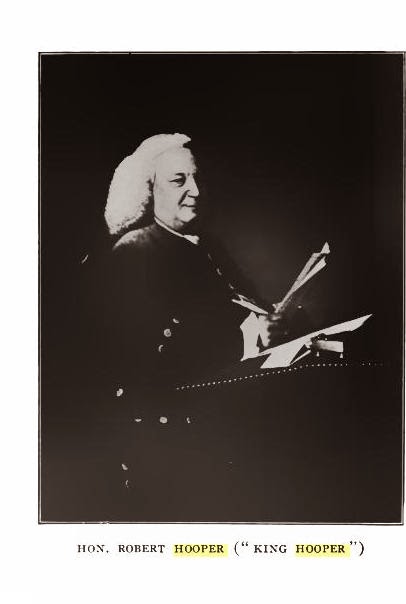
Robert Hooper became a merchant of very great extent of business and owner of large and somewhat widely separated properties. His control of the fishing business of Marblehead and other interests was so pronounced that he was popularly called "King Hooper." He owned lands in Marblehead, Salem, Danvers, and at Lyndeborough, N. H., and elsewhere. He had a large and elegant house at Marblehead and also a mansion at Danvers where he did "royal" entertaining. His vessels sailed to the fishing grounds of this coast and to foreign ports. In May, 1747, he agreed to pay the expenses of a school for poor children, which was established. He had a high reputation for honor and integrity in his business dealings, and for his benevolence. He presented Marblehead with a fire engine in March, 1751. One of his schooners, the Swallow, was captured at the West Indies in 1756. He was representative to the General Court in 1755; declined a seat in the Council on account of deafness in 1759.
Robert Hooper, Esquire, was one of the thirty-six persons appointed " councillers of the Province" in 1774, at the beginning of the agitation which led to the Revolution; and was one of twelve of that number who refused to accept the honor and participate in what they felt would be unjust to the people. He was, however, rather inclined to the side of the king during at least the early part of the war. He died May 20, 1790. From Hooper Genealogy
The Dalton Family:
Tristram had "a deep interest in agriculture and horticulture which was shown in the extensive garden of his residence on State street, and his estate on Pipestave hill. West Newbury." from Sarah Emery
Tristram served as a member of the Massachusetts House of Representatives from 1782 to 1785, and served as speaker in 1784. He was elected to the Continental Congress in 1783 and 1784, but did not attend. He served as a Massachusetts state senator from 1785 to 1788, and was appointed to the United States Senate in 1788. He served from March 4, 1789 to March 3, 1791. He spent his later years as surveyor Boston port from November 1814 until his death in 1817. According to records, Dalton lost all his fortune: he was induced by George Washington to invest in property about what is now Washington City. This did not prove for him a successful financial venture. Tristram Dalton was chosen vestryman of Fairfax Church, Fairfax Parish, Fairfax county, in 1789 (see page 268, Vol. I, Meade's Old Families and Churches of Virginia).
Picture from www.clipperheritagetrail.com
Below The Dalton Club built by Michael Dalton in 1746, was also the home of his son Tristram Dalton, merchant prince and Senator, who maintained a six-horse coach and an establishment that for luxury remains famous. According to legend At his death he left 1200 gallons of choice wines in his cellars. From Porter Sargent
Below: Invitation From President and Mrs. Washington to Tristram Dalton and family Ink, laid paper March 1, 1793 from Mount Vernon Museum
Please see Article The First Daltons in the New World by Rodney G. Dalton
![]() |
| Tristram Dalton |
From Vital Records & Benjamin Labaree Patriots and Partisans
Born May 28, 1738 Newburyport, MA
Died May 30, 1817 Boston, MA
Son of Captain Michael Dalton and Mary Little
He married Ruth Hooper, daughter of Robert Hooper and Ruth Swett Hooper of Marblehead, MA in 1758
Michael Dalton son of Philemon Dalton and Abigail Gove Dalton, b. Hampton, N. H., February 22, 1709.
Mary Little was daughter of Tristram Little and Anna Emery
Children: By his marriage with Ruth Hooper he had ten children; four boys and six girls. Three of his daughters only lived to grow up. All of the boys and one of the girls died in childhood. The loss of his sons was a great affliction to him. In a letter written in 1790 to his friend Mr. Hodge, congratulating him on the safe return of his son John from a sea voyage, he says, " alas ! for me, I have no sons whose return I shall ever welcome." from Eben F. Stone
1. Mary Dalton, b. July 4, 1764; d. young.
2. Ruth Hooper Dalton, b. April 8, 1769; m. July 21, 1789, Lewis Deblois.
3. Mary Dalton, b. March 4, 1771. m. Hon. Leonard White of Haverhill
4. Sarah Dalton, b. Feb. 19, 1775.
5. Catherine Dalton, b. April 13, 1777.
6. Robert Hooper, b. Apr. 8, 1769 bur. Sept. 6, 1775
The Hooper Family:
Robert Hooper became a merchant of very great extent of business and owner of large and somewhat widely separated properties. His control of the fishing business of Marblehead and other interests was so pronounced that he was popularly called "King Hooper." He owned lands in Marblehead, Salem, Danvers, and at Lyndeborough, N. H., and elsewhere. He had a large and elegant house at Marblehead and also a mansion at Danvers where he did "royal" entertaining. His vessels sailed to the fishing grounds of this coast and to foreign ports. In May, 1747, he agreed to pay the expenses of a school for poor children, which was established. He had a high reputation for honor and integrity in his business dealings, and for his benevolence. He presented Marblehead with a fire engine in March, 1751. One of his schooners, the Swallow, was captured at the West Indies in 1756. He was representative to the General Court in 1755; declined a seat in the Council on account of deafness in 1759.
Robert Hooper, Esquire, was one of the thirty-six persons appointed " councillers of the Province" in 1774, at the beginning of the agitation which led to the Revolution; and was one of twelve of that number who refused to accept the honor and participate in what they felt would be unjust to the people. He was, however, rather inclined to the side of the king during at least the early part of the war. He died May 20, 1790. From Hooper Genealogy
The Dalton Family:
Michael Dalton was evidently a man of ambition, and held the English ideas of family pride and consequence. He died, in 1770, at the age of sixty-one, too early to enjoy the satisfactions which he naturally anticipated from his success in business. His widow, the mother of Tristram, and a most estimable woman, afterwards married Patrick Tracy, the ancestor, on the maternal side, of the distinguished Charles, James and Patrick Tracy Jackson, to whom the Lowells, the Lees, and others of distinction are related. She died Dec. 10, 1791, aged 78. Michael Dalton lived, during the early part of his life, en the northerly side of what is now Market square, near the head of Greenleafs wharf. His portrait is in the possession of a great-granddaughter. It indicates considerable force of character, and his figure, attitude and expression all impress one with the idea that he was a man of energy and self-reliance. from Eben F. Stone
![]() |
| Patrick Tracy |
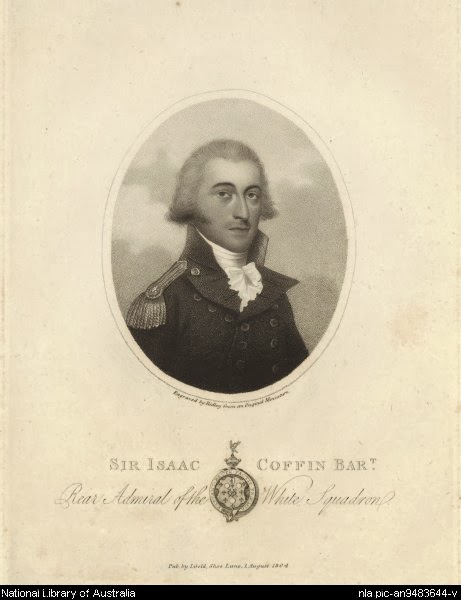
After his death his entire property, with the exception of the widow's thirds, went to his only child Tristram. He made no will, and his estate was never entered in Probate Court, so that there is no satisfactory evidence to be obtained of the extent and value of his property at the time of his decease. It was apparently ample to satisfy his son's wishes and expectations, for it seems that after his father's death he gave his attention not so much to business as to other matters more congenial to his taste. In 1782, Tristram Dalton paid the largest individual tax in Newburyport, the amount being £131-5-6. The same year Jonathan Jackson's tax was £100-1-5 ; Stephen Hooper's,£98-10-8; Joseph Marquand's, £67-6-7; Thomas Thomas's, £56-14-1; William Bartlet's, £37-7-8 ; Moses Brown's, £22-5-11. Tristram Dalton was named for his maternal grandfather, Tristram Little, who was a successful trader in Newburyport, having his place of business in Market square near the corner of Liberty street, and he, too, was named for his maternal grandfather, Tristram Coffin, the ancestor of the English admiral, Sir Isaac Coffin, and an important man in his day. The name of Tristram has been handed down to the present time in different families which trace their descent to Tristram Coffin. from Eben F. Stone
Tristram attended Governor Dummer Academy and went on to study law at Harvard College (1755) and in was in the same class with John Adams. After graduation he worked in Salem, but soon left law and joined his father in business in Newburyport.
Tristram had "a deep interest in agriculture and horticulture which was shown in the extensive garden of his residence on State street, and his estate on Pipestave hill. West Newbury." from Sarah Emery
Tristram does not appear to have taken any special interest in public affairs until the commencement of the Revolution, when he unhesitatingly put his heart and soul into the cause of his country. With what strength and ardor of patriotism he congratulates his friend Elbridge Gerry, then a member of the Continental Congress, on the Declaration of Independence in the following letter of July, 1776
Dear Sir: I wish you joy on the late Declaration, an event so ardently desired by your good self and the people you particularly represent. We are no longer to be amused with delusive prospects. The die Is cast. All is.at stake. The way Is made plain. No one can now doubt on which side it Is his duty to act. We have everything to hope from the goodness of our cause. The God of justice is omnipotent. We are not to fear what man or multitude can do. We have put on the harness, and I trust It will not be put off until we see our land of security and freedom, the wonder of the other hemisphere, the asylum of all who pant for deliverance from bondage.
Wishing every blessing to attend you, I am dear sir with great regard,
Your Obedient Servant,
Tristram Dalton
Picture from www.clipperheritagetrail.com
Below The Dalton Club built by Michael Dalton in 1746, was also the home of his son Tristram Dalton, merchant prince and Senator, who maintained a six-horse coach and an establishment that for luxury remains famous. According to legend At his death he left 1200 gallons of choice wines in his cellars. From Porter Sargent
Below: Invitation From President and Mrs. Washington to Tristram Dalton and family Ink, laid paper March 1, 1793 from Mount Vernon Museum
Labels:
Adams,
Coffin,
Dalton Club,
E F Stone,
Emery,
Gove,
Harvard,
Hooper,
Little,
Newburyport,
Swett,
Tristram Dalton,
Washington
Thursday, November 28, 2013
Quakers in Newbury MA
By Melissa Berry @ Newburyport News
---- — “The tale is one of an evil time,
When souls were fettered and thought was crime.
And heresy’s whisper above its breath
Meant shameful scourging, and bonds and death.”
— John Greenleaf Whittier
As we enjoy this season of good food and drink, as well as the liberty to choose which local house of the Lord we fancy, we can be thankful that Puritan tyrants no longer patrol our pastures as they did in our ancestors’ day.
In Newbury, the early settlers ran into conflict with Puritan authority over ecclesiastical differences. Quakers especially were in the hot bed, and anyone that harbored the “cursed sect” would feel the fiery fury of local officials. These aggressively “bloodthirsty” and “extremely fanatical” men were not open to compromise. When dealing with dissenters, in the words of John Proctor, Puritan “justice would freeze beer.”
When the Quakers came to the Colonies, they brought with them a spiritual democracy that threatened the Puritan aristocratic system. Their simplistic faith had an absence of clergy, creed and sacrament; moreover, they gave women equality. The head honchos like Endicott and Hawthorne labeled them “dangerous intruders invading our borders” and “wandering vagabonds.” Despite the tenacious efforts of the magistrates who wanted to eliminate the “vile heretics,” which included branding, whipping and cropping, the Quakers just kept coming, and the good folk of Newbury were more than willing to board and support them.
In the summer months of 1658, the farm of Robert Adams played host to two Quaker missionaries, William Brend and William Leddra. The Phelps family of Salem held a secret Quaker meeting, and Adams escorted the guest speakers to the gathering. See Hannah (Baskel) Phelps Phelps Hill - A Quaker Woman and Her Offspring Unfortunately, word got out and the constables came to break up the assembly and haul in all the “quaking heretics.”
When the law boys arrived, chaos broke out, and perhaps the distraction of finding their wives in the midst of this devil’s den allowed Adams to sneak his guests out and bring them back to Newbury. However, it would not be long before the authorities would track them down. Captain Gerrish and the minister paid a call on their buddy Adams, and despite their best efforts to resolve things amicably, Brend and Leddra were turned over to Salem Court. Adams paid the fines, but his friends faced a different fate.
Picture of Quaker Trial from Laura George
The tragic events that followed were nothing short of extreme cruelty. Confined to the Boston jail, Brend and Leddra were starved and repeatedly beaten with a three-pitched rope until they were on the brink of death. The disapproving sentiment of the public reached Endicott. Knowing he had to intervene, Endicott sent in a surgeon. Russell L. Jackson asserts that the aged Brend, with help from an “unseen Healer,” rose from his sick cot as he still had more light to spread and preach about in New England.
In August 1659, Thomas Macy (see Powow Preacher Spats with Puritans) was prosecuted and fined 30 shillings for hosting four Quakers. Two of his guests, William Robinson and Marmaduke Stephenson, would later be executed upon the gallows on Dec. 27, 1659. (Visit The Thomas Macy Home-Colby House
Fed up with the Puritan government, Macy “shook the dust from off his feet” and departed to Nantucket, where the iron hand of these despots did not reach. Thomas left “because he could not in justice to the dictates of his own conscience longer submit to the tyranny of the clergy and those in authority” (Macy Papers). His journey was a spiritual sign of deliverance as he, his family, Isaac Coleman and Edward Starbuck survived a fierce storm that raged like the Furies on their open boat.
Others like Coffin, Swain, Pike and Folger joined Macy on Nantucket. Allen Coffin noted that, while it was not an Elysium, the island was indeed blessed with “plenty’s golden smile” and “a refuge of the free.” Thanks to these brave, forward-thinking men, Nantucket became the first settlement to enjoy complete separation of Church and State.
On March 16, 1663, John Emery was presented to the court at Ipswich and charged with entertaining Quakers. The whole ordeal caused quite a buzz, and Rev. Parker showed up with a posse, demanding some answers. Sarah Emery asserts: “At this period one can scarcely depict the commotion such an incident must have caused in the secluded and quiet settlement of Quascacunquen, on the banks of the winding Parker, or appreciate the courage evinced by John Emery and his wife in thus rising above popular prejudice, and fanatical bigotry, and intolerance.” For this offence, the court fined Emery four pounds, plus costs and fees.
While we are grateful to live with religious freedom, we must also be grateful that our ancestors’ spirit, courage and light was not extinguished despite the tyrannical terror of dark Puritanical forces.
Happy Thanksgiving! Thank You to the Port Library Archives and Cheryl Follansbee.
---- — “The tale is one of an evil time,
When souls were fettered and thought was crime.
And heresy’s whisper above its breath
Meant shameful scourging, and bonds and death.”
— John Greenleaf Whittier
As we enjoy this season of good food and drink, as well as the liberty to choose which local house of the Lord we fancy, we can be thankful that Puritan tyrants no longer patrol our pastures as they did in our ancestors’ day.
In Newbury, the early settlers ran into conflict with Puritan authority over ecclesiastical differences. Quakers especially were in the hot bed, and anyone that harbored the “cursed sect” would feel the fiery fury of local officials. These aggressively “bloodthirsty” and “extremely fanatical” men were not open to compromise. When dealing with dissenters, in the words of John Proctor, Puritan “justice would freeze beer.”
When the Quakers came to the Colonies, they brought with them a spiritual democracy that threatened the Puritan aristocratic system. Their simplistic faith had an absence of clergy, creed and sacrament; moreover, they gave women equality. The head honchos like Endicott and Hawthorne labeled them “dangerous intruders invading our borders” and “wandering vagabonds.” Despite the tenacious efforts of the magistrates who wanted to eliminate the “vile heretics,” which included branding, whipping and cropping, the Quakers just kept coming, and the good folk of Newbury were more than willing to board and support them.
![]() |
| Phelps Farm |
In the summer months of 1658, the farm of Robert Adams played host to two Quaker missionaries, William Brend and William Leddra. The Phelps family of Salem held a secret Quaker meeting, and Adams escorted the guest speakers to the gathering. See Hannah (Baskel) Phelps Phelps Hill - A Quaker Woman and Her Offspring Unfortunately, word got out and the constables came to break up the assembly and haul in all the “quaking heretics.”
When the law boys arrived, chaos broke out, and perhaps the distraction of finding their wives in the midst of this devil’s den allowed Adams to sneak his guests out and bring them back to Newbury. However, it would not be long before the authorities would track them down. Captain Gerrish and the minister paid a call on their buddy Adams, and despite their best efforts to resolve things amicably, Brend and Leddra were turned over to Salem Court. Adams paid the fines, but his friends faced a different fate.
Picture of Quaker Trial from Laura George
The tragic events that followed were nothing short of extreme cruelty. Confined to the Boston jail, Brend and Leddra were starved and repeatedly beaten with a three-pitched rope until they were on the brink of death. The disapproving sentiment of the public reached Endicott. Knowing he had to intervene, Endicott sent in a surgeon. Russell L. Jackson asserts that the aged Brend, with help from an “unseen Healer,” rose from his sick cot as he still had more light to spread and preach about in New England.
In August 1659, Thomas Macy (see Powow Preacher Spats with Puritans) was prosecuted and fined 30 shillings for hosting four Quakers. Two of his guests, William Robinson and Marmaduke Stephenson, would later be executed upon the gallows on Dec. 27, 1659. (Visit The Thomas Macy Home-Colby House
Fed up with the Puritan government, Macy “shook the dust from off his feet” and departed to Nantucket, where the iron hand of these despots did not reach. Thomas left “because he could not in justice to the dictates of his own conscience longer submit to the tyranny of the clergy and those in authority” (Macy Papers). His journey was a spiritual sign of deliverance as he, his family, Isaac Coleman and Edward Starbuck survived a fierce storm that raged like the Furies on their open boat.
Others like Coffin, Swain, Pike and Folger joined Macy on Nantucket. Allen Coffin noted that, while it was not an Elysium, the island was indeed blessed with “plenty’s golden smile” and “a refuge of the free.” Thanks to these brave, forward-thinking men, Nantucket became the first settlement to enjoy complete separation of Church and State.
On March 16, 1663, John Emery was presented to the court at Ipswich and charged with entertaining Quakers. The whole ordeal caused quite a buzz, and Rev. Parker showed up with a posse, demanding some answers. Sarah Emery asserts: “At this period one can scarcely depict the commotion such an incident must have caused in the secluded and quiet settlement of Quascacunquen, on the banks of the winding Parker, or appreciate the courage evinced by John Emery and his wife in thus rising above popular prejudice, and fanatical bigotry, and intolerance.” For this offence, the court fined Emery four pounds, plus costs and fees.
While we are grateful to live with religious freedom, we must also be grateful that our ancestors’ spirit, courage and light was not extinguished despite the tyrannical terror of dark Puritanical forces.
Happy Thanksgiving! Thank You to the Port Library Archives and Cheryl Follansbee.
Labels:
17th century,
Adams,
Brend,
Coffin,
Coleman,
Emery,
Endicott,
Folger,
Hathorne,
Leddra,
Macy,
melissa berry,
Nantucket,
newbury ma,
Persecutions,
Phelps,
Pike,
Quakers,
Salem MA,
Swain
Wednesday, October 9, 2013
Naughty and Notable Citizens of the Puritan Republic
And Be Sure to Join New Group on Face Book: Scandalous Ancestors
Among the abundant court records involving drunkenness, here are a few regarding tanked-up naughties: John Shotswell was fined eleven shillings in September of 1633 "for distemping himself with drink at Agawam." Similarly, Robert Coles was fined for his excesses and "enjoined to stand with a white sheet of paper on his back wherein A Drunkard shall be written in great letters, as long as the Court thinks meet.'' John Lee was sentenced to be whipped and fined for calling Mr. Ludlowe "a false-hearted knave and hard-hearted knave, heavy friend etc" while on one of his benders. Daniell Ela, presented in Salisbury Court in 1672 for being drunk in Newbury at Robert Holmes' house, as well as for cursing and swearing, was convicted and fined. He was then ordered to remain in prison until the judgment was satisfied.
When our Puritan ancestors set up shop in New England, the business at hand was keeping the flock pious, proper, and productive. Public humiliation was one popular form of keeping order, as well denting the purse -- essentially, the vices and folly of the citizens financed and sponsored the pretentious, dogmatic ideals of a handful of tyrants. The courts had carte blanche to dole out punishments and benefited immensely from any “wanton” deviant behavior.
As the colonies grew, so did the records of naughtiness. Punishment came in many forms, and all respectable settlements had the latest mutilation machines and contraptions on hand. For instance, laws required each town to acquire a set of stocks. Both Concord and Newbury were fined 5 pounds (March 1638) for non-compliance and soon got up to code. There were also many other forms of executing justice -- badges, brandings, and bridles, to name a few. So sit back and enjoy these ancestral tales of crime and punishment, and be grateful you live in present-day Massachusetts rather than the "ice age -- sterile, forbidding, unproductive, its history dotted only with boulders and stunted growth" (Howe, The Puritan Republic).
Some “good” wives of Mass Bay were more like mischievous mice than obedient crones -- some sought to play while their cat fellows were away. A case from 1672-1673, Sarah Roe of Ipswich was forced to wear a sign on Sabbath day: “For My Baudish Carriage.” Roe had an affair with Joseph Leigh while her husband was away at sea, and both were charged with “unlawful familiarity.” Leigh suffered a day of severe lashing, plus a 5-pound fine. Roe, in addition to her debasing debut at the meeting house, spent a month behind bars. George Palmer, after committing folly with Margary Ruggs “through her allurement,” confessed voluntarily, so he only endured a few hours in the stocks; however, the sultry temptress Ruggs was severely whipped in public for “enticing and alluring.”
Another interesting case of fleshy intrigue in Newbury (1633) really made windows steam and had every Chatty Cathy buzzing. The incident occurred between a traveling doctor named Henry Greenland and Mary Rolfe, wife of John Rolfe, a shipwright. While Rolfe was away on a voyage, Greenland lodged at a tavern owned by John Emery (Mary's stepfather), conveniently located next door to the lonely lass. Apparently, Greenland was quite a looker, and after just one night of window tapping, he made his way into her hot bed. Her companion, Betty, hired by Mary’s husband during his absence, claims Mary fainted when Greenland attempted his advances. When the news hit the townie grandes dames, Greenland had nowhere to hide and was hauled into court, convicted, and fined 30 pounds for “attempting adultery.” Although the outcome left Mary's reputation unscathed, she no doubt had some fetching memories of the event.
Our ancestors often referred to the burden of the human flesh as “that pang of pleasure.” Like the mice wives, hitched men folk (and some single studs, too) also liked to sport around town on occasion. John Davies of Ipswich was whipped for “gross offenses and attempting lewdness with diverse women” and forced to wear a “U” for "Unclean" upon his chest for six months. Suffolk County records report a sentence requiring Thomas Jay “to stand upon a block or stool in the Boston marketplace with a paper upon his breast written in large characters: For Lascivious Carriages towards Young Women” (1675). Likewise, John Stanwood was sentenced to prison for committing fornication with Christian Marshman, who was with child by him. He tried to deny it, but there was too much evidence stacked up against him, and his lusty love bite cost him 50 pounds in damages. For her part in the scandal, Marshman received a severe public lashing.
Drunkenness was next on the list of naughty rituals. Called “habitual tipplers,” these folks were like gangsters put in the proverbial “black book.” In 1639, the General Court passed a law that made excessive drinking a penal offense. Many entries in the record books read like this: "James Brown is censured for drunkeness to bee set two hours in the bilboes upon market day at Boston publiquely." The magistrates ordered all ordinaries and public places that served strong waters to make note of frequent tipplers, and serving them meant incurring a fine. Additionally, officials placed strict surveillance upon innkeepers and tavern owners and required them to procure licenses.
Laws required every innkeeper to be "always provided of strong, wholesome Beer, of four bushels of Mault (at the least) to a hogshead, which he shall not sell at above twopence the Ale quart." Innkeepers were also expressly forbidden to sell sack or strong water, to allow any drunken person on their premises, or to suffer any person "to drink excessively, viz., above halfe a pint of wine for one person, at a time, or to continue Tipling above the space of halfe an hour, or at unseasonable times, or after nine of the Clock at night" (Mass. Records Vol. 10).
Among the abundant court records involving drunkenness, here are a few regarding tanked-up naughties: John Shotswell was fined eleven shillings in September of 1633 "for distemping himself with drink at Agawam." Similarly, Robert Coles was fined for his excesses and "enjoined to stand with a white sheet of paper on his back wherein A Drunkard shall be written in great letters, as long as the Court thinks meet.'' John Lee was sentenced to be whipped and fined for calling Mr. Ludlowe "a false-hearted knave and hard-hearted knave, heavy friend etc" while on one of his benders. Daniell Ela, presented in Salisbury Court in 1672 for being drunk in Newbury at Robert Holmes' house, as well as for cursing and swearing, was convicted and fined. He was then ordered to remain in prison until the judgment was satisfied.
The 1652 court records list this judgment against Dr. William Snelling: “presentment for cursing is fined ten shillings and the fees of court.” It seems the good doc was not one to wait for the 5 o’clock happy hour, and instead he happily sipped his way through all his appointments. He reportedly recited this fun foot therapy after chasing a few beers - a stunt which landed him in front of the magistrates:
"I'll pledge my friends,
And for my foes,
A plague for their heels,
And a poxe for their toes."
And for my foes,
A plague for their heels,
And a poxe for their toes."
In his History of Newbury, Currier notes Snelling was “denouncing his enemies within temperate zeal." His friends William Thomas and Thomas Milward signed and filed the following statement with the clerk of the court: "This is to certify whom it may concern that we, the subscribers, being called upon to testify against Mr. William Snelling for words by him uttered, affirm that being in way of merry discourse, a health being drunk to all friends.” He answered with the above lines, but later defended himself by asserting he meant it only for the West County folk. Affixed to this statement was the following acknowledgment:
March 12, 1651-2, all which I acknowledge and I am sorry I did not express my intent, or that I was so weak as to use so foolish a proverb.
Guilielmvs Snelling.
Notwithstanding this humble apology, it appears from the court records that on the thirtieth day of March 1652 "Mr. William Snelling upon his presentment for cursing is fined 10 pounds and fees of court."
Along with sins of the flesh, drunkenness, and cursing, the Sabbath day became another hot topic for Puritan punishment. There are numerous court documents from brawling to “sundry abuses and misdemeanors, committed by sundry persons… to drink, sport and otherwise to misspend that precious time, which things tend much to the dishonor of God.” Thomas Bragg and Edward Cogswell had a heated quarrel "on the Lord's day in time of exercise" and both were fined 10 pounds. Humphrey Griffin was fined 10 pounds for unloading barley on the Sabbath before sunset, as well as for picking peas. Edmond Bridges was fined five shillings for writing a note to John Todd in Rowley meeting house during lecture time.
The years 1674 - 1676 proved to be busy years for church disorderliness. The General Court took the matter in hand and transferred powers to both the officers of the congregation and the Selectmen of Towns to appoint a patrolman "to reform all such disordered persons, in the congregations or elsewhere about the meeting houses." These reforms certainly did not stop Stephen Cross, who “struck out at worshipper” and was fined. Elizabeth Hunt and Abigail Burnam disrupted public service and were arraigned before the Court, and their fathers admonished. Sam Hunt Jr. was admonished and fined for “his light behaviour.” John Averill was hauled into Court for striking Thomas Twigs in the meeting house "in the time of public ordinances on the Sabbath."
Family feuds were yet another naughty transgression that would certainly have earned colonists a spot on Jerry Springer. John Tilliston/Tilston? of Newbury tied his wife to the bedpost with a plow chain to keep her at home. He was fined and put on notice to “keep good behavior and live with wife and provide for as husband ought to do.” This was not Tilliston's first offence; he had a rap sheet as long as my arm -- A Sketch of Newbury lists the following:
John Tillotson was presented for scandalous and reproachful speeches cast on the elders and others in a publick church meeting on a Lord's day.
John Tillotson on his many offences is fined twenty pounds, bound to his good behaviour, and fined twenty-seven pounds for killing a mare belonging to Mr. James Noyes.
In an old manuscript formerly owned by the Reverend James Noyes and now held by one of his descendants, Mr. Silas Noyes, there is an account of the testimony taken in the case of John Tillotson and a record of some of "his many offences" that induced the court to lay so heavy a fine on him. The evidence concludes:
At last he killed our elder's mare, great with foal, and a special good beast she was, provoked with her at ye instant, he killed her with a long pike, thrust through both her sides ... the morning after this transaction he made a deed to convay all his estate away from himselfe offering it to goodman (name illegible) whereby our elder would have been wholly defrauded of his mare.
According to existing documentation, Tillotson was a definite bad boy, perhaps suffering from some fatal attraction mixed with a boiling temper.
Hannah Gray, who was quite the home wrecker and hell raiser, is another prime example of Puritan deviance. She appears in the court records for her rampant lascivious behavior. She was described as “a lying girl, and several times in the night when deponent waked, she missed her and heard her laughing and giggling at the boys' bed which was in the same room.” She was also seen carrying on with Andrew Davis, as testified by Mary Sollas, as well as others. According to Sollas, her brother Robert mentioned, “Hana would entice the 'scoller boys,' and that she was guilty of baudy language and acts among the boys and girls.” Likewise, John Batcheler deposed that when Hannah Gray lived with his family, she was a lying little devil and his wife Elizabeth could say the same. Hannah “for great offences, was ordered to stand at the meeting house at Salem upon a lecture day, with a paper on her head on which was written in capital letters, I STAND HEERE FOR MY LACIVIOUS & WANTON CARIAGES. In addition, she would repeat in like manner, in Beverly or else be whipped.”
The servants made it into the court records as well: for example, Benjamin Rolfe's maid in Newbury, for having a child out of wedlock. In 1671, Hugh March's maid, Elizabeth Iago of Newbury, for wishing that the devil had Mary Ladd and all the company, in which company was her master, John Attcason/Atkinson and Daniell Ely. Edward Stone, complained of for running away fourteen or fifteen times from his master, Nathaniell Tredwell, was ordered to serve his said master one year past the term of his indenture.
So there you have it! And there's lots more to come, so stay tuned!
Labels:
Emery,
Greenland,
Hugh March,
Iago,
Ipswich MA,
John Leigh,
kinson,
Ladd,
Leigh,
Newbury,
Palmer,
Puritan punishments,
Rolfe,
RUggs,
Sara Roe,
social crimes,
Stanwood
Subscribe to:
Posts (Atom)